Sunday, May 26, 2019

Week 8: NanoTech + Art

Image result for nanoparticles self assemblyBefore this week, I was unfamiliar with the term nanotechnology. I was unaware that "almost every aspect of science and technology is somehow impacted by nanotechnology" (Gimzewski). Nanotechnology is everywhere and "...chances are that you have nanoparticles on you at the moment, but you don't even know it" (Gimzewski). Nanotechnology is what is going to push us over the edge into the future.
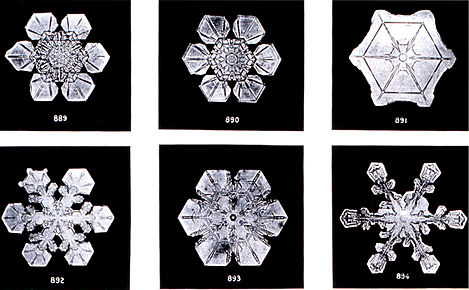
Image result for self organization snowflake

Self organization and self assembly are the bases of nano- technology. "Nano particles are very small and to make them nano by nano its not very practical"(Gimzewski), so we rely on molecules to organize themselves into higher structures. Nature has always depended upon this. The book Growth And Form from 1945 "looks at various beautiful structures in nature, for instance the snowflake" and shows how it transforms from simple water molecules into an intricate pattern.  Trees and shells are also examples of self organization in nature. The blue morpho butterfly is an illustration of how self organization can be used on a nanoscale. The blue morpho butterfly is found in South America and has blue iridescent wings. The wings color does not come from pigment, but rather from a nanostructure. Light is manipulated on a nanoscale and reflects a light blue color. It is amazing to see such a beautiful creature that naturally appears like this, resembling a piece of art.
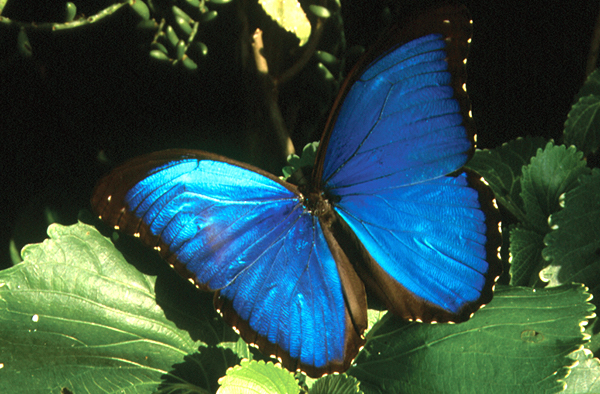
Image result for blue morpho butterfly
Blue Morpho Butterfly
Overall, I am shocked to see how nanotechnology plays such a large role in our everyday lives. "Nanotechnology exists in our food products and agriculture"(Gimzewski). Nano technology is advancing and can be used for environmental purposes such as "edible nano wrappers, which people say will reduce environmental waste and pollution"(Gimzewski). Also, nano senses can track the process of food manufacturing, which can be helpful in regards to detecting harmful bacteria, such as E.coli. I think that nano technology is the future and will have tremendous impact upon art, science, medicine and robotics. Nanotechnology is limitless and can be used to positively influence the world.

Image Sources:

SnowBrains. “Brain Post: Why No Two Snowflakes Look Alike.” SnowBrains, 3 June 2013, snowbrains.com/brain-post-why-no-two-snowflakes-look-alike/.

“Self-Assembly of Nanoparticles.” Wikiwand, www.wikiwand.com/en/Self-assembly_of_nanoparticles.

Clubb, Jeremy. “Top 8 Blue Morpho Butterfly Facts.” Rainforest Cruises, Rainforest Cruises, 19 Sept. 2016, www.rainforestcruises.com/jungle-blog/top-8-blue-morpho-butterfly-facts.

Works Cited:

“Blue Morpho Butterfly.” NISE Network, www.nisenet.org/content-keywords/blue-morpho-butterfly.

Saini, Rajiv, et al. “Nanotechnology: the Future Medicine.” Journal of Cutaneous and Aesthetic Surgery, Medknow Publications, 2010, www.ncbi.nlm.nih.gov/pmc/articles/PMC2890134/.

Wolpert, Stuart. “Best in Snow: New Scientific Device Creates Electricity from Snowfall.” Phys.org, Phys.org, 15 Apr. 2019, phys.org/news/2019-04-scientific-device-electricity-snowfall.html.

Sekhon, Bhupinder S. “Food Nanotechnology - an Overview.” Nanotechnology, Science and Applications, Dove Medical Press, 4 May 2010, www.ncbi.nlm.nih.gov/pmc/articles/PMC3781769/.

UC Online. “Nanotech Jim pt3.” YouTube, YouTube, 21 May 2012, www.youtube.com/watch?time_continue=741&v=X0HCNiU_108.

UC Online. “Nanotech Jim pt1.” YouTube, YouTube, 21 May 2012, www.youtube.com/watch?time_continue=741&v=X0HCNiU_108.

UC Online. “Nanotech Jim pt5.” YouTube, YouTube, 21 May 2012, www.youtube.com/watch?time_continue=741&v=X0HCNiU_108.

UC Online. “Nanotech Jim pt6.” YouTube, YouTube, 21 May 2012, www.youtube.com/watch?time_continue=741&v=X0HCNiU_108.

Saturday, May 25, 2019

Event 2

Noise Aquarium poster
For event 2, I participated in the Noise Aquarium at the California NanoSystems Institute Art Science Gallery. I enjoyed the fact that this exhibit was not only informative, but also interactive. It demonstrated how different noise sources and underwater pollution influence plankton. 

Professor Vesna projected animated 3D-models obtained with scientific imaging techniques of the extremely diverse plankton spectrum and immersed the audience in the 3D ‘aquarium’ of diverse planktons. They were projected as large as whales, so participants were closer to the animations. We went onto a platform where a destructive anthropocentric noise was being played and it continued until we were perfectly centered in the middle of the platform. This gave us a perspective as to how noise affects plankton. Professor Vesna informed us that the actual exhibit has every wall surrounded by the ocean, so it appears even more realistic. 


                  Me at the event                                                                                  The interactive platform

This event showcases art, science and technology. The display enables the participants to become more aware of how essential plankton is to the ecosystem, which it successfully does. Overall, I would highly recommend this exhibit to everyone. Not only is it interactive and beautiful, but it also has a very important message. It is evident that microscopic organisms are crucial for an ecological balance.


Sources:

Sick-Leitner, Magdalena, et al. “Diving into Deep Space with Noise Aquarium.” Ars Electronica Blog, 27 Aug. 2018, ars.electronica.art/aeblog/en/2018/08/27/noise-aquarium/.

“PROJECT DESCRIPTION.” NOISE AQUARIUM, noiseaquarium.com/the-project/.

“NOISE AQUARIUM BY VICTORIA VESNA.” The Paseo Project, paseoproject.org/portfolio/victoria-vesna/.

“Featured Event.” California NanoSystems Institute at UCLA, cnsi.ucla.edu/project/noise-aquarium-3d-audio-visual-experience-of-plankton-in-noise-pollution/.

Vesna, Victoria. “VICTORIA VESNA.” Victoria Vesna | Projects, victoriavesna.com/index.php?p=projects&item=0.

Sunday, May 19, 2019

Week 7: Neuroscience + Art

Santiago Ramon y Cajal's
Glial cells of the cerebral cortex of a child, 1904
 greyartgallery.nyu.edu/exhibition/
beautiful-brainthe-drawings-santiago-ramon-y-cajal/
Artists have always been fascinated with the mind and body. Neuroscience has only been studied for approximately a century. The work of Santiago Ramon y Cajal, who was the founder of neuroanatomy is a perfect example of the collaboration between art and science. He originally wanted to be an artist and said how"only artists are attracted to science"(Vesna). Cajal devoted a considerable amount of time to drawing nature scenes during his childhood. His significant finding was that you can understand connection neurons simply by looking at their shapes. "The tree like structure of neurons are not only beautiful, but they are also optimized to connect to neurons in a very efficient manner"(Vesna).  Overall Santiago Ramon y Cajal is the perfect illustration of "an artist and scientist coming together with the left brain and right brain that really flourished in harmony and really contributed to the idea of consciousness in neuroscience"(Vesna). 

Similar to Ramon y Cajal's work, but more contemporaneous was Susanne Anker's 2008 project titled The MRI Butterfly. It is composed of "15 identical brain scans arranged in a grid with a butterfly"(Vesna) that is placed in the center. It created an optical illusion, where even though each butterfly was the same in each print, they still appeared different from each other.

MRI Butterfly
All 15 scans from MRI Butterfly
“Artwork.” Suzanne Anker, suzanneanker.com/artwork/?wppa-album=16&wppa-cover=0&wppa-occur=1.
Another organism being used in neuroscience are sea sponges. These very simple organisms, which help us to understand how our brain and the synapses work. Although sea sponges lack nervous systems, "these ancient animals offer clues to the development and origins of complex neurological systems. They possess signature proteins which react in a similar way to the proteins in synapses and possess all the building blocks for the development of nerves" (Vesna).  As a result, these organisms are crucial for studying neurologic disorders.
Fig. 1.
Model sponge species studied world Leys, Sally P. “Elements of a 'Nervous System' in Sponges.” Journal of Experimental Biology, The Company of Biologists Ltd, 15 Feb. 2015, jeb.biologists.org/content/218/4/581.
In conclusion, it is very apparent how connected neuroscience is to art. It is important to understand art and biology, in order to have a comprehensive knowledge of neuroscience. More and more scientific breakthroughs will happen by expanding our horizons in the future, just like the sea-sponge findings did for us.

Sources:

“Artwork.” 
Suzanne Anker, suzanneanker.com/artwork/?wppa-album=16&wppa-cover=0&wppa-occur=1.

Vesna, Victoria. “Conscious / Memory (Part 1).” Lecture. 16 Nov 2012. <http://www.youtube.com/watch?feature=player_embedded&v=DLVQIwOn7o8>

Leys, Sally P. “Elements of a 'Nervous System' in Sponges.” Journal of Experimental Biology, The Company of Biologists Ltd, 15 Feb. 2015, jeb.biologists.org/content/218/4/581.

“When Arts Meet Neuroscience...” PLOS Neuroscience Community, 17 Oct. 2016, blogs.plos.org/neuro/2016/10/16/when-arts-meet-neuroscience-by-naureen-ghani/.

Ink, Social. “The Beautiful Brain: The Drawings of Santiago Ramón y Cajal.” Grey Art Gallery, greyartgallery.nyu.edu/exhibition/beautiful-brainthe-drawings-santiago-ramon-y-cajal/.

Sunday, May 12, 2019

Week 6: BioTech + Art

Image result for joe davis artist
Joe Davis
https://www.biosummit.org/joe-davis
I found it fascinating how art can be used as a vehicle to understand bio-technology. Artists have found a place for themselves in the world of modern science. I want to focus on the positive aspects of bio-technology and art and how artists are attempting to use this medium in order to have impact upon society.  For example, the artist Joe Davis who is a pioneer in bio-art, formulated an experiment to see how E.coli bacteria would respond to jazz music. He is one of the artists "...whose medium is the science of molecular biology" (Hussain).  The findings showed that "If the sound waves prove stressful to the bacteria, the stress might result in increased production of antibiotics"(Davis). This demonstrated how an art form such as music can play an instrumental role in the medical field. 


Image result for fish and chips symbiotica
Fish and Chips
http://www.fishandchips.uwa.edu.au/project/Emma_text.pdf


Another example of this was the Fish and Chips project, which was devised in the Symbiotica Laboratory in Western Australia. A robotic arm was  created by "the activity of gold fish neurons to produce art" (Vesna). The researchers wanted to study the motion of gold fish neurons, so they used drawing as a way to track their movement. It is incredible how they were able to successfully produce 2D drawings from nerve cells. 

Overall I think the interplay of art and biotechnology can be be extremely beneficial because it can assist in the development of further technologies to "aid and extend human abilities" (Vesna). Scientists as mentioned, have used art to make scientific discoveries. Art can be a tool, which connects humans to science. 


Sources:

Vesna, Victoria. “Part I.” YouTube, 26 Mar. 2012, youtu.be/Fvp924_pbgc.

Vesna, Victoria. “Part II.” YouTube, 26 Mar. 2012, youtu.be/Fvp924_pbgc.

Levy, Ellen K. “Defining Life: Artists Challenge Conventional Classifications.”


Sandhana, Lakshmi. “The Art of Rat-Powered Pigs Wings.” Wired, Conde Nast, 4 June 2017, www.wired.com/2002/05/the-art-of-rat-powered-pigs-wings/.

“Science as Art Unites Disciplines.” The Tech - Online Edition, tech.mit.edu/V120/N26/bioartists.26f.html.

Davis, Joe, and Katie Egan. Audio Microscope: Joe Davis : Genetics and Culture, 2000, geneticsandculture.com/genetics_culture/pages_genetics_culture/gc_w03/davis_audio_scope.htm.


Event 5 (Extra Credit)

For event 5 I went to the exhibit called "Contact High: A Visual History of Hip-Hop" at the Annenberg Space for Photography. I...