Wednesday, June 5, 2019

Event 5 (Extra Credit)


For event 5 I went to the exhibit called "Contact High: A Visual History of Hip-Hop" at the Annenberg Space for Photography. It documented the rise of hip-hop and how it was able to spread through technology. The exhibit displayed old hip-hop photographers unedited contact sheets as well as photographs of hip-hop artists today. There was also a 30 minute documentary explaining how hip-hop disseminated. I was surprised to discover the impact that technology and art had upon hip-hop.


Hip-hop originated in the Bronx.  Without photography and digital technology, it would not have had the same influence. Before social media, in order to get people to listen to your music, you would need to have a vehicle to attract their attention, which were record covers. Young people would run to newsstands to view the artwork on the record albums. This was a way that they were first introduced to the artists. Subsequently, the images started circulating to other cities. Hip-hop eventually spread throughout the country and different cities started adding their own twist on hip-hop to make it more original. 

Over time Hip-hop music has established itself as a genre and now artists see the importance of imagery. Instagram is currently one of the most vital tools used to market artists. Without photography and now social media, hip-hop would not have globalized. The visual aspect of hip-hop is so crucial. Hip-hop is not just popular in the U.S., but is worldwide due to advancements in technology. 

Overall, I would highly suggest visiting this exhibit as it affords a completely new perspective on hip-hop. The gallery revealed many significant unknown facts as to how hip-hop popularized. Not only does the exhibit display many rare pictures, but is also very interactive and informative. I had no realization as to how important photography is in hip-hop, as well as the visual aspects behind it. I have now come to understand how technology and art  go hand in hand and play a major role in our everyday lives.


Sources:

“CONTACT HIGH: A Visual History of Hip-Hop.” Annenberg Space for Photography, www.annenbergphotospace.org/exhibits/contact-high/.

Fourquet, Laure. “Tracing Hip-Hop's Phenomenal Rise.” The New York Times, The New York Times, 23 July 2015, www.nytimes.com/2015/07/24/arts/international/tracing-hip-hops-phenomenal-rise.html.

Rowley, Glenn. “'Contact High' Photography Exhibit in LA to Showcase Intimate Visual History of Hip-Hop.” Billboard, 21 Mar. 2019, www.billboard.com/articles/columns/hip-hop/8503248/contact-high-photography-exhibit-la-visual-hip-hop-history.

Staff, DX. “Digitally Divided: Technology's Impact On Hip Hop Music & Culture.” HipHopDX, HipHopDX, 17 May 2013, hiphopdx.com/editorials/id.2109/title.digitally-divided-technologys-impact-on-hip-hop-music-culture.

“The Emergence of Hip-Hop.” The Paley Center for Media, www.paleycenter.org/the-emergence-of-hip-hop/.


Event 4 (Extra Credit)

On May 18th for event 4 I went to the "Dirty Protest" exhibit at The Hammer Museum. I was pleasantly surprised to learn that the Hammer Museum is affiliated with UCLA. The exhibition "highlights a lively mix of painting, sculpture, and media installations by more than 30 international artists"(Hammer Museum) and shows the wide array of mediums used by contemporary artists.
 I found Petra Cortright's sickhands quite interesting as they highlighted how "for this generation the internet is a fertile ground for inspiration". The internet is currently what is most commonly used for research and creating new ideas and images. In the videos displayed, Cortright demonstrates how now there is no distinction in the line between high and low culture, as she reveals that there are no boundaries with what the internet can be used for. The piece "Capitalizes and comments on the ubiquity of homemade videos" (Kadist).


Another art piece that utilized different techniques is Analia Saban's Cherry Wood Circuit Board #1. The piece "explores a relationship between the analog and the digital, with an emphasis on materiality"(Blay)She used a laser to sculpt the cherrywood. The piece was multidimensional and was very unique. 


Overall, I would highly recommend this exhibit to everyone, as it shows that art does not have boundaries. All the pieces in the exhibit were so diverse and highlighted how technology is a perfect tool for art. It was very modern and symbolic, which appealed to me. 


Sources:

“Dirty Protest: Selections from the Hammer Contemporary Collection - Hammer Museum.” The Hammer Museum, 22 Feb. 2019, hammer.ucla.edu/exhibitions/2019/dirty-protest-selections-from-the-hammer-contemporary-collection/.

Artinfo, Blouin. “‘Dirty Protest: Selections from the Hammer Contemporary Collection’ at Hammer Museum, Los Angeles.” Artinfo, 28 Jan. 2019, www.blouinartinfo.com/news/story/3510657/dirty-protest-selections-from-the-hammer-contemporary.

UCLA Arts: School of the Arts and Architecture, arts.ucla.edu/single/dirty-protest-selections-from-the-hammer-contemporary-collection/.

“Tapestry as Semiconductor: A Chat with Analia Saban.” Glasstire, 11 Apr. 2019, glasstire.com/2019/04/08/tapestry-as-semiconductor-a-chat-with-analia-saban/.

“Petra Cortright Sickhands.” Sickhands – Kadist, kadist.org/work/sickhands/.

Event 3

For event 3, I went to the UCLA Meteorite Collection. Meteor refers to "a variety of pieces of debris—made up of either rock, metal, or a mix of the two—that enter the atmosphere from outer space. Before doing so, they’re called meteoroids."(Stromberg).  There is a vast array of meteorites on display at the exhibit. Each one has its own unique characteristics. My personal favorite meteorite shown was the Esquel-pallasite, because of its striking contrast between the gold and black, which was found in Argentina in 1951. I would have never thought it was a meteorite. I also enjoyed seeing the second largest meteorite from the USA called the "Old Woman" iron meteorite that is 177.4 lbs. I was shocked to learn that this is only a piece of the whole meteorite, as it is massive. This is an amazing exhibit to visit, as you are able to see how the meteorites are natural pieces of art, as well as being provided with the scientific background as to how they were formed.
                           
Esquel-pallasite
Old Woman Iron Meteorite


Very informative information board

It was cool to learn about the process that takes place where rocks change texture and phases called thermal metamorphism. I found it fascinating how about "500 meteorites reach Earth's surface, but only 5 or 6 make it to the scientists to study" (Meteorite Collection).


Overall, I have a new found appreciation for meteorites. I had never seen them up close, nor such a vast variety of them. They are all so unique and it is great how UCLA has also incorporated a scientific foundation in the exhibit. It is important to learn about the formation of meteorites, as they are more than just beautiful rocks.


 Sources:

“Meteorite Collection.” UCLA, meteorites.ucla.edu/.

“Meteoritical Bulletin: Entry for Old Woman.” Meteoritical Bulletin RSS, www.lpi.usra.edu/meteor/metbull.php?code=18007.

“Couple Loans Unexpected Find to UCLA Meteorite Gallery.” Daily Bruin, dailybruin.com/2016/06/27/couple-loans-unexpected-find-to-ucla-meteorite-gallery/.

Dorminey, Bruce. “Rare Meteorites Are Now Sought After By The Art Crowd.” Forbes, Forbes Magazine, 20 Dec. 2015, www.forbes.com/sites/brucedorminey/2015/11/30/high-end-meteorites-as-holiday-stocking-stuffers/#4e0649395e50.

Stromberg, Joseph. “A Smithsonian Expert Breaks Down the Science of Meteors.” Smithsonian.com, Smithsonian Institution, 15 Feb. 2013, www.smithsonianmag.com/smithsonian-institution/a-smithsonian-expert-breaks-down-the-science-of-meteors-18847526/.


Sunday, June 2, 2019

Week 9: Space + Art

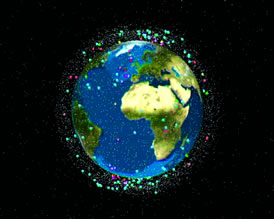
Collision II by Richard Clar
It is amazing how space can actually be a vehicle for merging Nanotechnology, mathematics, biotechnology and robotics together (Vesna). The artist Richard Clar is well known for his art in space projects, which include "environmental issues, such as orbital debris, war and peace, the Search for Extraterrestrial Intelligence (SETI), and water management on earth" (Clar). I found his piece from 2003 titled 'COLLISION II', fascinating as it focuses "on the serious problem of orbital debris" (Clar). It is a video simulation that "views the orbiting constellation sculpture from the vantage points of low-earth orbit and geosynchronous orbit during a twelve hour period that is reduced to twelve minutes" (Clar).

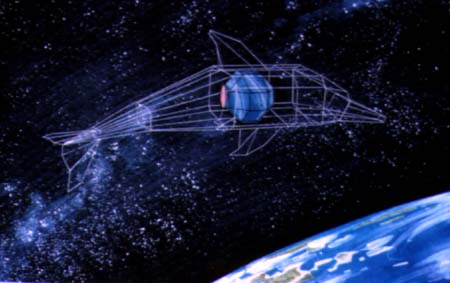
Space Flight Dolphin by Richard Clar


Cosmic Sculpture by Arthur Woods
Another interesting collaboration of art and space is the Cosmic Sculpture by Arthur Woods from 1993. The purpose of the project "was to investigate the properties of sculpture in weightlessness and to evaluate the integration of art into the human space program" (Woods).  The painted geometric sculpture made out of aluminum tubes "was the first three-dimensional artwork to be specifically conceived for and officially realized in a space habitat" (Woods). When the sculpture was freed from gravity it moved around in a similar fashion to dancing, as it was floating freely to the music being played.


Overall, it was intriguing to learn about artists who are stepping outside of the box (into space) and are making scientific discoveries. These artists are using many mediums and are using new techniques to conquer space. It is evident that space is the perfect canvas for art and technology.

Image sources: 


COLLISION II, www.arttechnologies.com/collision2.html.


“Richard Clar.” Free Enterprise, sites.artsblock.ucr.edu/free-enterprise/richard-clar-3/.

“Cosmic Dancer - a Space Art Intervention by Arthur Woods.” Introduction: News : Arthur Woods : Cosmic Dancer, www.cosmicdancer.com/introduction.php.

Works Cited: 

Vesna , Victoria, dir. Space Part 1. 2012. Film. 30 Nov 2012. <http://www.youtube.com/watch?feature=player_embedded&v=2O5C0Iv6ROo>.


COLLISION II, www.arttechnologies.com/collision2.html.

“Cosmic Dancer - a Space Art Intervention by Arthur Woods.” Introduction: News : Arthur Woods : Cosmic Dancer, www.cosmicdancer.com/introduction.php.

NASA, NASA, history.nasa.gov/alsj/RichardClar.html.

Earth, Greater. “Cosmic Dancer on the Mir Space Station - Space Art in Earth Orbit.” YouTube, YouTube, 30 Jan. 2012, www.youtube.com/watch?v=-RsBoftdVLc.

Sunday, May 26, 2019

Week 8: NanoTech + Art

Image result for nanoparticles self assemblyBefore this week, I was unfamiliar with the term nanotechnology. I was unaware that "almost every aspect of science and technology is somehow impacted by nanotechnology" (Gimzewski). Nanotechnology is everywhere and "...chances are that you have nanoparticles on you at the moment, but you don't even know it" (Gimzewski). Nanotechnology is what is going to push us over the edge into the future.

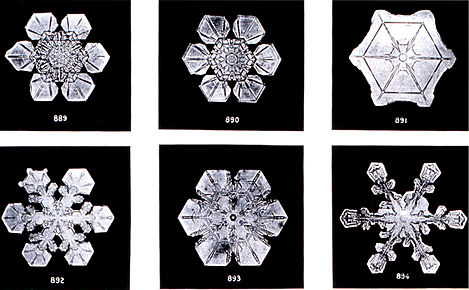
Image result for self organization snowflake

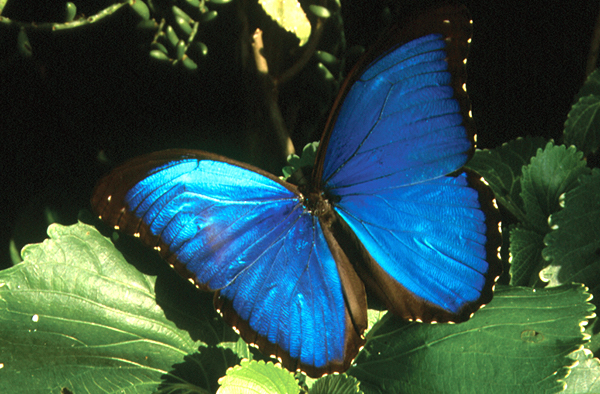
Self organization and self assembly are the bases of nano- technology. "Nano particles are very small and to make them nano by nano its not very practical"(Gimzewski), so we rely on molecules to organize themselves into higher structures. Nature has always depended upon this. The book Growth And Form from 1945 "looks at various beautiful structures in nature, for instance the snowflake" and shows how it transforms from simple water molecules into an intricate pattern.  Trees and shells are also examples of self organization in nature. The blue morpho butterfly is an illustration of how self organization can be used on a nanoscale. The blue morpho butterfly is found in South America and has blue iridescent wings. The wings color does not come from pigment, but rather from a nanostructure. Light is manipulated on a nanoscale and reflects a light blue color. It is amazing to see such a beautiful creature that naturally appears like this, resembling a piece of art.
Image result for blue morpho butterfly
Blue Morpho Butterfly
Overall, I am shocked to see how nanotechnology plays such a large role in our everyday lives. "Nanotechnology exists in our food products and agriculture"(Gimzewski). Nano technology is advancing and can be used for environmental purposes such as "edible nano wrappers, which people say will reduce environmental waste and pollution"(Gimzewski). Also, nano senses can track the process of food manufacturing, which can be helpful in regards to detecting harmful bacteria, such as E.coli. I think that nano technology is the future and will have tremendous impact upon art, science, medicine and robotics. Nanotechnology is limitless and can be used to positively influence the world.

Image Sources:

SnowBrains. “Brain Post: Why No Two Snowflakes Look Alike.” SnowBrains, 3 June 2013, snowbrains.com/brain-post-why-no-two-snowflakes-look-alike/.

“Self-Assembly of Nanoparticles.” Wikiwand, www.wikiwand.com/en/Self-assembly_of_nanoparticles.

Clubb, Jeremy. “Top 8 Blue Morpho Butterfly Facts.” Rainforest Cruises, Rainforest Cruises, 19 Sept. 2016, www.rainforestcruises.com/jungle-blog/top-8-blue-morpho-butterfly-facts.

Works Cited:

“Blue Morpho Butterfly.” NISE Network, www.nisenet.org/content-keywords/blue-morpho-butterfly.

Saini, Rajiv, et al. “Nanotechnology: the Future Medicine.” Journal of Cutaneous and Aesthetic Surgery, Medknow Publications, 2010, www.ncbi.nlm.nih.gov/pmc/articles/PMC2890134/.

Wolpert, Stuart. “Best in Snow: New Scientific Device Creates Electricity from Snowfall.” Phys.org, Phys.org, 15 Apr. 2019, phys.org/news/2019-04-scientific-device-electricity-snowfall.html.

Sekhon, Bhupinder S. “Food Nanotechnology - an Overview.” Nanotechnology, Science and Applications, Dove Medical Press, 4 May 2010, www.ncbi.nlm.nih.gov/pmc/articles/PMC3781769/.

UC Online. “Nanotech Jim pt3.” YouTube, YouTube, 21 May 2012, www.youtube.com/watch?time_continue=741&v=X0HCNiU_108.

UC Online. “Nanotech Jim pt1.” YouTube, YouTube, 21 May 2012, www.youtube.com/watch?time_continue=741&v=X0HCNiU_108.

UC Online. “Nanotech Jim pt5.” YouTube, YouTube, 21 May 2012, www.youtube.com/watch?time_continue=741&v=X0HCNiU_108.

UC Online. “Nanotech Jim pt6.” YouTube, YouTube, 21 May 2012, www.youtube.com/watch?time_continue=741&v=X0HCNiU_108.

Saturday, May 25, 2019

Event 2

Noise Aquarium poster
For event 2, I participated in the Noise Aquarium at the California NanoSystems Institute Art Science Gallery. I enjoyed the fact that this exhibit was not only informative, but also interactive. It demonstrated how different noise sources and underwater pollution influence plankton. 

Professor Vesna projected animated 3D-models obtained with scientific imaging techniques of the extremely diverse plankton spectrum and immersed the audience in the 3D ‘aquarium’ of diverse planktons. They were projected as large as whales, so participants were closer to the animations. We went onto a platform where a destructive anthropocentric noise was being played and it continued until we were perfectly centered in the middle of the platform. This gave us a perspective as to how noise affects plankton. Professor Vesna informed us that the actual exhibit has every wall surrounded by the ocean, so it appears even more realistic. 


                  Me at the event                                                                                  The interactive platform

This event showcases art, science and technology. The display enables the participants to become more aware of how essential plankton is to the ecosystem, which it successfully does. Overall, I would highly recommend this exhibit to everyone. Not only is it interactive and beautiful, but it also has a very important message. It is evident that microscopic organisms are crucial for an ecological balance.


Sources:

Sick-Leitner, Magdalena, et al. “Diving into Deep Space with Noise Aquarium.” Ars Electronica Blog, 27 Aug. 2018, ars.electronica.art/aeblog/en/2018/08/27/noise-aquarium/.

“PROJECT DESCRIPTION.” NOISE AQUARIUM, noiseaquarium.com/the-project/.

“NOISE AQUARIUM BY VICTORIA VESNA.” The Paseo Project, paseoproject.org/portfolio/victoria-vesna/.

“Featured Event.” California NanoSystems Institute at UCLA, cnsi.ucla.edu/project/noise-aquarium-3d-audio-visual-experience-of-plankton-in-noise-pollution/.

Vesna, Victoria. “VICTORIA VESNA.” Victoria Vesna | Projects, victoriavesna.com/index.php?p=projects&item=0.

Sunday, May 19, 2019

Week 7: Neuroscience + Art

Santiago Ramon y Cajal's
Glial cells of the cerebral cortex of a child, 1904
 greyartgallery.nyu.edu/exhibition/
beautiful-brainthe-drawings-santiago-ramon-y-cajal/
Artists have always been fascinated with the mind and body. Neuroscience has only been studied for approximately a century. The work of Santiago Ramon y Cajal, who was the founder of neuroanatomy is a perfect example of the collaboration between art and science. He originally wanted to be an artist and said how"only artists are attracted to science"(Vesna). Cajal devoted a considerable amount of time to drawing nature scenes during his childhood. His significant finding was that you can understand connection neurons simply by looking at their shapes. "The tree like structure of neurons are not only beautiful, but they are also optimized to connect to neurons in a very efficient manner"(Vesna).  Overall Santiago Ramon y Cajal is the perfect illustration of "an artist and scientist coming together with the left brain and right brain that really flourished in harmony and really contributed to the idea of consciousness in neuroscience"(Vesna). 

Similar to Ramon y Cajal's work, but more contemporaneous was Susanne Anker's 2008 project titled The MRI Butterfly. It is composed of "15 identical brain scans arranged in a grid with a butterfly"(Vesna) that is placed in the center. It created an optical illusion, where even though each butterfly was the same in each print, they still appeared different from each other.

MRI Butterfly
All 15 scans from MRI Butterfly
“Artwork.” Suzanne Anker, suzanneanker.com/artwork/?wppa-album=16&wppa-cover=0&wppa-occur=1.
Another organism being used in neuroscience are sea sponges. These very simple organisms, which help us to understand how our brain and the synapses work. Although sea sponges lack nervous systems, "these ancient animals offer clues to the development and origins of complex neurological systems. They possess signature proteins which react in a similar way to the proteins in synapses and possess all the building blocks for the development of nerves" (Vesna).  As a result, these organisms are crucial for studying neurologic disorders.
Fig. 1.
Model sponge species studied world Leys, Sally P. “Elements of a 'Nervous System' in Sponges.” Journal of Experimental Biology, The Company of Biologists Ltd, 15 Feb. 2015, jeb.biologists.org/content/218/4/581.
In conclusion, it is very apparent how connected neuroscience is to art. It is important to understand art and biology, in order to have a comprehensive knowledge of neuroscience. More and more scientific breakthroughs will happen by expanding our horizons in the future, just like the sea-sponge findings did for us.

Sources:

“Artwork.” 
Suzanne Anker, suzanneanker.com/artwork/?wppa-album=16&wppa-cover=0&wppa-occur=1.

Vesna, Victoria. “Conscious / Memory (Part 1).” Lecture. 16 Nov 2012. <http://www.youtube.com/watch?feature=player_embedded&v=DLVQIwOn7o8>

Leys, Sally P. “Elements of a 'Nervous System' in Sponges.” Journal of Experimental Biology, The Company of Biologists Ltd, 15 Feb. 2015, jeb.biologists.org/content/218/4/581.

“When Arts Meet Neuroscience...” PLOS Neuroscience Community, 17 Oct. 2016, blogs.plos.org/neuro/2016/10/16/when-arts-meet-neuroscience-by-naureen-ghani/.

Ink, Social. “The Beautiful Brain: The Drawings of Santiago Ramón y Cajal.” Grey Art Gallery, greyartgallery.nyu.edu/exhibition/beautiful-brainthe-drawings-santiago-ramon-y-cajal/.

Event 5 (Extra Credit)

For event 5 I went to the exhibit called "Contact High: A Visual History of Hip-Hop" at the Annenberg Space for Photography. I...